Pearson Edexcel · A-Level · English Literature
Course version: 9ET0 · Version from Sept 2015
Poetry – Section A: Post-2000 Poetry – Poems of the Decade: An Anthology…
Full specification wording
Component 3: Poetry – Section A: Post-2000 Poetry – Poems of the Decade: An Anthology of the Forward Books of Poetry 2002–2011: Out of the Bag Seamus Heaney
The poem blends childhood memory with classical mythology to explore the origins of life, the mystery of creation, and the transition from innocence to experience.
Checked against the Pearson Edexcel 9ET0 specification (opens in a new tab) on .
- Point 13 of 20
- 4 key terms
Study notes
From the checked teaching notes for this specification point.
The idea
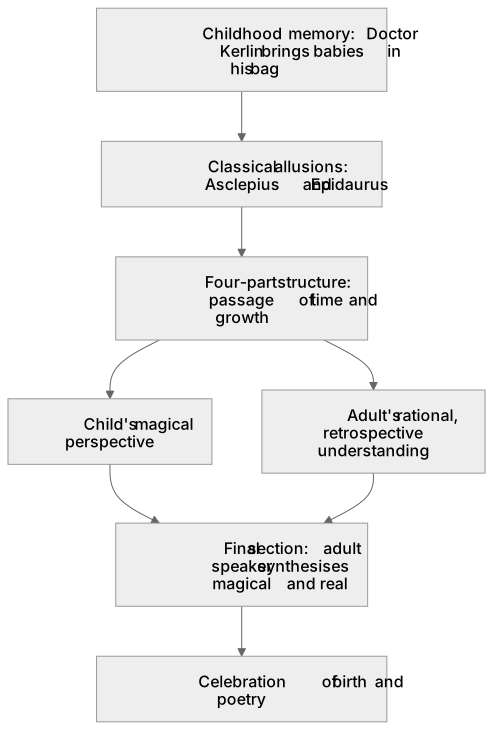
The poem blends childhood memory with classical mythology to explore the origins of life, the mystery of creation, and the transition from innocence to experience. Heaney recalls the local doctor, Doctor Kerlin, who the child believed brought babies in his medical bag. This personal anecdote is interwoven with allusions to the Greek healing god Asclepius and the sanctuary at Epidaurus.
What earns the marks
- Analyse the blending of personal childhood memory with classical Greek mythology, such as Asclepius and Epidaurus, to elevate the everyday event of childbirth.
- Evaluate the contrast between the child's magical, naive perspective and the adult's rational, retrospective understanding of the world.
- Discuss the significance of the four-part structure in representing the passage of time, intellectual growth, and the journey of illness and healing.
- Examine the use of sensory imagery and medical terminology to ground the mystical and mythological elements in physical reality.
Common mistakes and how to put them right
Focusing solely on the childhood anecdote while ignoring the complex classical allusions in the later sections of the poem, which limits the depth of analysis.
Misinterpreting the tone as purely nostalgic, missing the underlying themes of mortality, illness, and the clinical reality of the doctor's role.
Failing to address the poem's form; students often overlook how the enjambment and tercets create a fluid, continuous narrative mirroring the flow of memory.
Exam tips
- Link the motif of the 'bag' to the concept of hidden knowledge and the creative process of writing poetry itself.
- Compare Heaney's exploration of childhood memory and the passage of time with poems like 'Effects' or 'Material'.
- Pay close attention to the shift in perspective in the final section, where the adult speaker synthesises the magical and the real.
Try the lesson
The start of the Component 3: Poetry – Section A: Post-2000 Poetry – Poems of the Decade: An Anthology of the Forward Books of Poetry 2002–2011: Out of the Bag Seamus Heaney lesson, made from checked teaching notes for this specification point.
Have a go first
In Seamus Heaney's poem 'Out of the Bag', how does the speaker as a child imagine that babies are delivered?
Listen
The poem blends childhood memory with classical mythology to explore the origins of life, the mystery of creation, and the transition from innocence to experience. Heaney recalls the local doctor, Doctor Kerlin, who the child believed brought babies in his medical bag. This personal anecdote is interwoven with allusions to the Greek healing god Asclepius and the sanctuary at Epidaurus. A strong answer earns marks for these points. Analyse the blending of personal childhood memory with classical Greek mythology, such as Asclepius and Epidaurus, to elevate the everyday event of childbirth. Evaluate the contrast between the child's magical, naive perspective and the adult's rational, retrospective understanding of the world. Discuss the significance of the four-part structure in representing the passage of time, intellectual growth, and the journey of illness and healing. Examine the use of sensory imagery and medical terminology to ground the mystical and mythological elements in physical reality. Exam tip: Link the motif of the 'bag' to the concept of hidden knowledge and the creative process of writing poetry itself.
See it
Key words
Say what each word means before you turn the card.
Childhood and Memory
Try answering aloud or in your head before turning the card.
Myth and Magic
Try answering aloud or in your head before turning the card.
Birth and Creation
Try answering aloud or in your head before turning the card.
The Passage of Time
Try answering aloud or in your head before turning the card.
See every definition
- Childhood and Memory
- The poem blends childhood memory with classical mythology to explore the origins of life and the transition from innocence to experience.
- Myth and Magic
- Allusions to the Greek healing god Asclepius and the sanctuary at Epidaurus are interwoven with a personal anecdote of the child's magical, naive perspective.
- Birth and Creation
- The mystery of creation is explored through the child's belief that Doctor Kerlin brought babies in his medical bag, celebrating the miraculous nature of birth and poetry.
- The Passage of Time
- A four-part structure represents the passage of time, intellectual growth, and the journey of illness and healing.
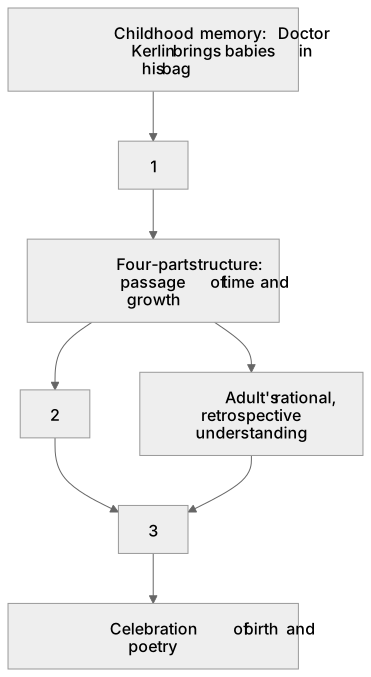
Label the diagram
Some boxes have lost their names. Pick the right name for each number.
1Box 1
2Box 2
3Box 3
There is more to this lesson
The full lesson goes on to check your understanding and help you earn the marks. Create a free account to carry on, with your progress saved.
A week of Premium from your first lesson · Then the free plan continues · No card, no charge
Test your understanding of Component 3: Poetry – Section A: Post-2000 Poetry – Poems of the Decade: An Anthology of the Forward Books of Poetry 2002–2011: Out of the Bag Seamus Heaney
Active recall beats re-reading. Take an instant quiz now to test what you’ve learned and lock it into long-term memory.
A week of Premium from your first lesson · Then the free plan continues · No card, no charge